Like many cities, Nanaimo has a rich and layered history, with stories buried beneath the streets and traces of the past woven throughout the city we know today. From historic buildings and heritage sites to city parks, memorials, and even ancient carvings, reminders of those who came before us can be found around every corner. Shaped by generations of Indigenous peoples, early settlers, industry, and community, the region's history runs deep, creating a unique history.
In this series, we take a look at Nanaimo’s past following the City of Nanaimo’s curated history tours. These tours are designed to give visitors and locals alike a chance to reflect and understand the story of our city.
Nanaimo has a unique and diverse history with coal mining and industry. Beginning in the 1850s when a small Hudson Bay Company outpost was built to over a hundred years later to a city full of history. This coal-mining history is what helped build the Nanaimo we know today.
It is important to acknowledge that these lands are the traditional territory of the Snuneymuxw People, who have been in relationship with this place since time immemorial. These sites reflect a period of industrial activity that brought significant change to the land and surrounding communities.
Today, these locations stand as layered places, where industrial history and the deeper stories of the land exist side by side.
Take a tour of Nanaimo’s Coal Town Trail, featuring a variety of different types of buildings, including houses, hotels, barracks, cemeteries, rescue stations, and parks.
Please note that this list includes private residences. Please be respectful of those currently living there.
Bastion
Located at 98 Front Street, the Bastion is the only remaining Hudson's Bay Company wooden Bastion still standing.
Globe Hotel
Located at 25 Front Street and built in 1887, this Italianate-style hotel provided housing for coal miners.
St. Paul’s Anglican Church
Built in 1931 and located on 100 Chapel Street, this is one of the oldest continuously functioning parishes in BC.
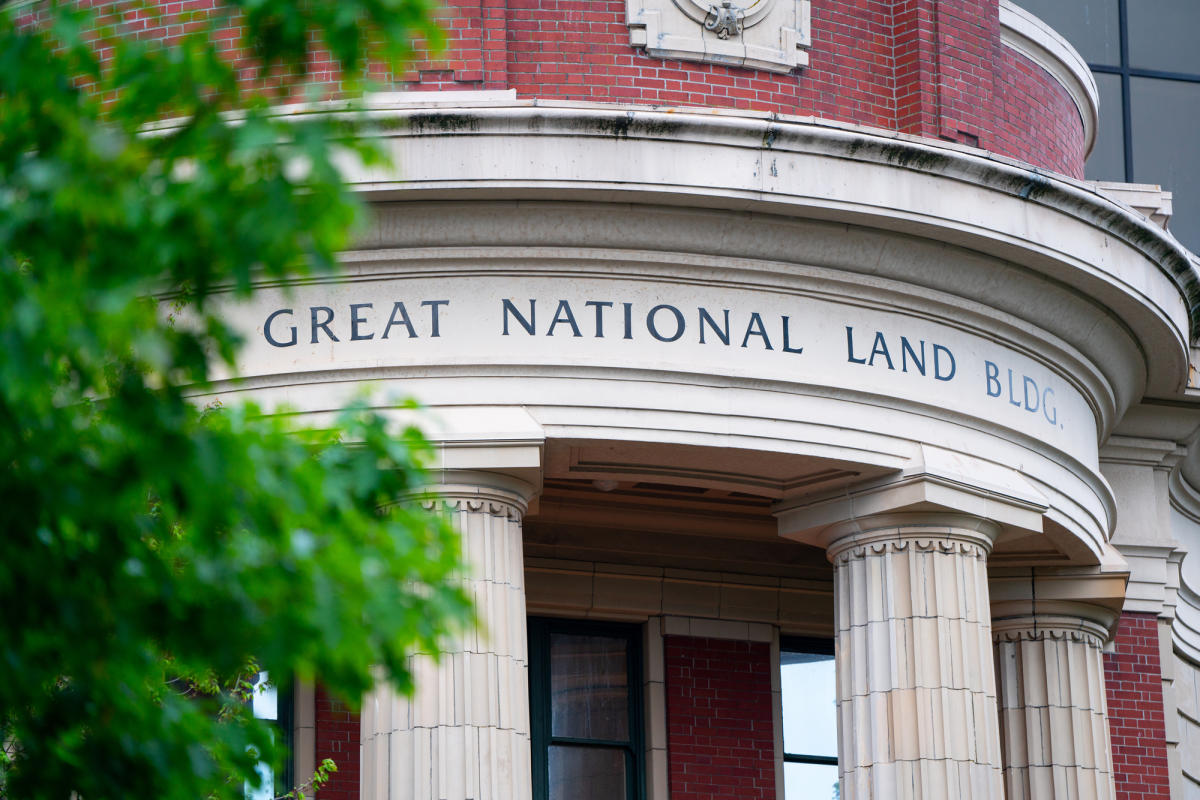
Great National Land Building
Built in 1914 and located on 5-17 Church Street, this Classical Revival-style building symbolizes stability during a volatile time.
Hall block
Located at 37-45 Commercial Street, this Edwardian commercial-style row was built in 1925.
Occidental Hotel
Located at 432 Fitzwilliam Street, the Oxy has been in continuous use for more than 100 years.
Manson Residence
Located at 471 Selby Street, the Manson Residence was a typical Nanaimo worker's house during the mid to late 1880s.
Cavan Street Coal Seam
Located at 95 Cavan Street, this coal seam represents the seams mined from 1852 to 1953 in Nanaimo.
Nob Hill Park
Located at 400 Milford Crescent, Nob Hill Park was planned out in 1863. This park remains true to its original plan over 150 years later, with an updated playground.
Beck Residence
Located at 610 Selby Street, this Craftsman bungalow was built for a blacksmith.
Sullivan Residence
Located at 673 Selby Street, this 1890s residence is a rare surviving Queen-Anne-style building.
Deverill Square
Located at 200-262 Irwin Street, this park was named after George Deverill, assistant manager of the Vancouver Coal Mining and Land Company.
Haliburton Street Miners Cottage
This building, located at 111 Haliburton Street, is one of the earliest surviving examples of a miner's cottage in Nanaimo.
Jones Bevilockway Residence
Located at 55 Haliburton Street, this house is one of the oldest structures in Nanaimo.
Young Residence
This late-Victorian house, located on 102 Fry Street, was the home of union activity.
Robins Gardens
Located at 1150 Milton Street, this part of town had some of Nanaimo's most elegant homes; now all that remains are the gardens.
No.1 Mine Site and Memorial Plaque
Located at 1151 Milton Street, this plaque remembers the lives of 150 miners who died in the 1887 mine explosion.
Provincial Government Mine Rescue Station
Nanaimo's coal mines were some of the most dangerous in the world. Located on 1009 Farquhar Street, this is where rescue teams received training.
Rowe Residence
Located at 545 Haliburton Street, this was the house of Mary Ann Rowe, an astute businesswoman.
Robins Park
This park originally hosted cricket, soccer, and horse racing matches. You’ll find it located at 620 Park Avenue.
Leynard Residence
Located at 442 Milton Street, this house is an example of the popular English Cottage style during the interwar period.
McCourt Residence
This Late Victorian-era house was built in 1901 as a rental property, located at 750 Franklyn Street.
Young-Parageter Residence
Located at 45 Milton Street, this Craftsman bungalow was built in 1911.
Newbury Residence
Manager of the No.1 Mine, Arthur Newbury, lived in this Craftsman bungalow located at 39 Milton Street.
Connaught Barracks Stable
Originally an Agricultural Hall in 1913, this hall has been turned over to the military to suppress coal union demonstrations.
Layer-Hall Residence
Located at 115 Machleary Street, this Edwardian-era building housed the surgeon to the Western Fuel Company.
Wells Residence
This Edwardian craftsman-style bungalow is located at 904 Wentworth Street.
Nanaimo Public Cemetery
Located at 555 Bowen Road, there are over 600 inscriptions on graves that highlight mine-related deaths between 1860 and 1950.
Crewe Residence
Home to miner Frederick Crewe, this house is located on 624 Wakesiah Avenue.
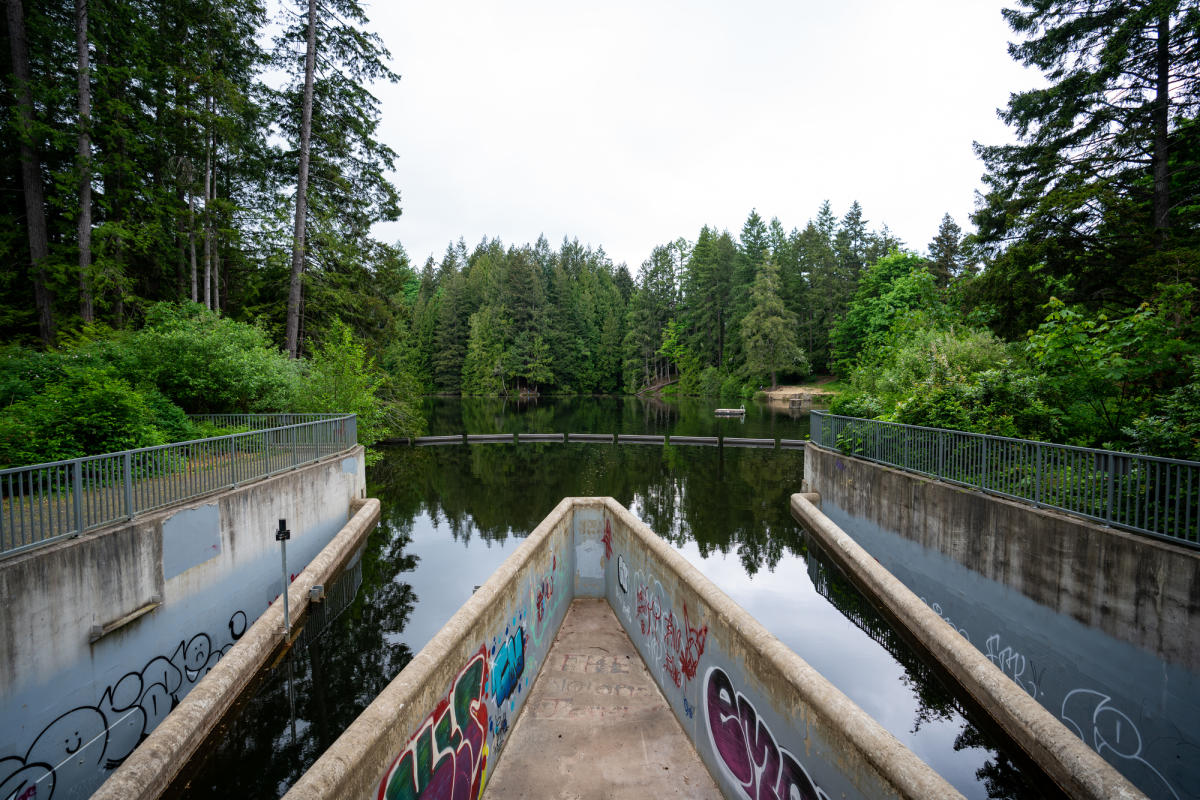
Colliery Dam Park
Built to supply water for coal washing, this dam at 645 Wakesiah Avenue was also used for domestic purposes.
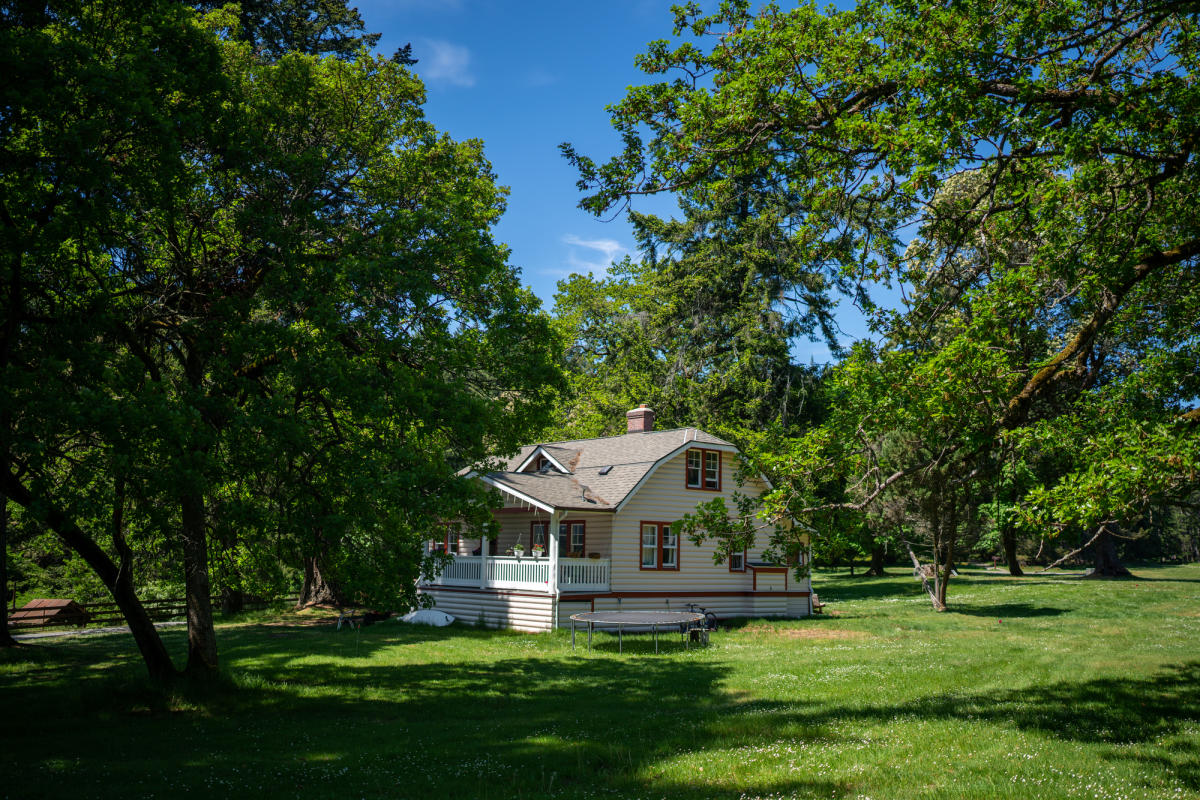
Newbury Farm House
Located on 678 Second Street, this house was home to a family of miners.
Brick Cottage
This cottage was built as a coal company office in 1910, located at 1904 Jingle Pot Road.
Chinese Cemetery
This ethnic cultural landscape, located at 1598 Townsite Road, features traditional Chinese elements; this is one of the few remaining tangible pieces of evidence of Nanaimo’s Chinese heritage.
Wellington Cemetery
This cemetery, located at 4700 Ledgerwood Road, is one of the few remaining pieces of the community of Wellington that was eventually absorbed by Nanaimo.
Snuneymuwx Ancient Burial Area
This site, now located at the Departure Bay, Bay Street intersection, dates back over 3500 years with remains associated with the Snuneymuwx First Nation.
Garden Memorial to Chinese Pioneers
This small plot, located at 105 St. George Street, was used as a Chinese Burial ground where bodies were interred, intended that their bones would be returned to China.
Isaacson Residence
Located at 255 Stewart Avenue, this English Cottage bungalow was built for S.V. Isaacson.
Saysutshun (Newcastle Island)
This island hosts the site of the Saysutshun Village, where native artifacts were recovered.
Want to Learn More?
Nanaimo has a unique and diverse history with the coal mining industry. From the 1850s to the 1930s, coal was at the centre of Nanaimo’s economy, often coming at the cost of miners' lives.
Now, we can learn about the people who helped Nanaimo grow into the city it is today. Seeing how industry comes and goes and its impact on the land, people, and businesses it surrounds.
Want more information on these historic places? Check out the Nanaimo Heritage Walks Through Time list. You can also find more walks to take through historic Nanaimo!